Composite Fencing Lower Mainland

You are looking for composite fencing in Lower Mainland or the Lower Mainland, and you want a fence that looks good, holds up in BC’s climate, and does not need repainting every two years. That is exactly what TJ Railing installs.

We supply and install composite fencing for residential properties across the Lower Mainland. Composite fence panels in privacy and semi-privacy configurations, horizontal composite fence designs for a modern look, and custom layouts for non-standard lots and slopes. Every installation is measured, designed, and built for the specific property.

If you want the look of a wood fence without the rot, warping, and annual maintenance that comes with it, composite fencing is the right material. Read on to see exactly what we offer, how it holds up in BC’s climate, and what it costs.

GET A FREE QUOTE

Fill out the form and we'll get back to you to follow up & get your project started with a free, no-obligation quote.

SERVICE OVERVIEW

What Is Composite Fencing?

Composite fencing is made from a blend of recycled wood fibre and plastic, compressed and formed into fence boards and panels that look like natural wood but behave like plastic. The result is a fence material that has the visual warmth of wood without the vulnerabilities that make wood fencing a maintenance burden in BC's wet climate.

Unlike natural wood, composite fence panels do not absorb moisture, which means they do not rot, warp, crack, or split when exposed to rain. They do not need annual painting or staining to maintain their appearance. They do not attract insects. And they do not fade significantly under UV exposure, particularly the capped composite products we use, where a protective polymer cap covers all four sides of the board.

The posts and structural framing for composite fencing are typically aluminum or galvanized steel, which complements the low-maintenance profile of the composite boards. The full system, boards and structure, is designed to last 25 to 30 years with minimal upkeep in BC's climate.

Composite Fencing Systems We Install

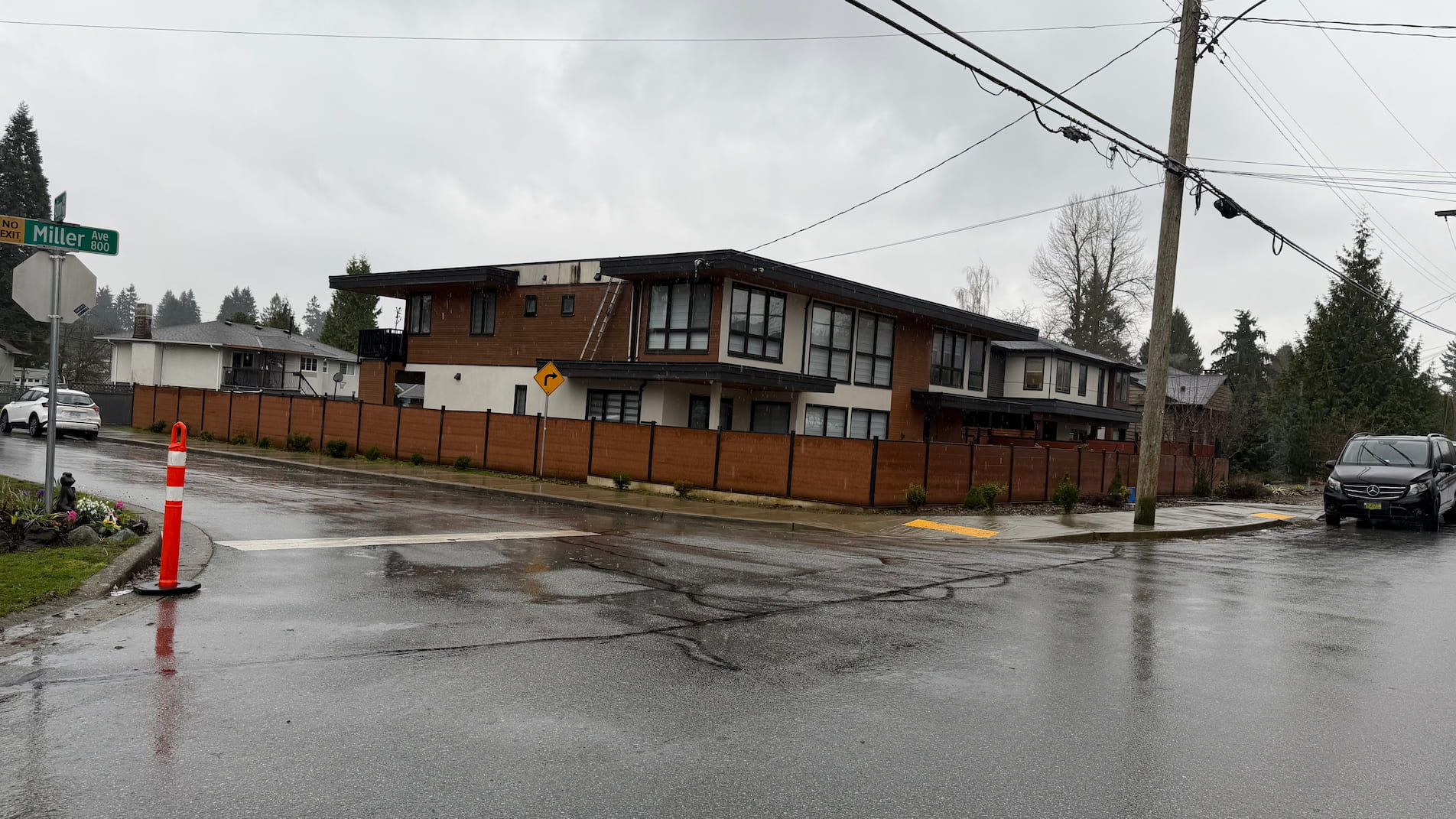
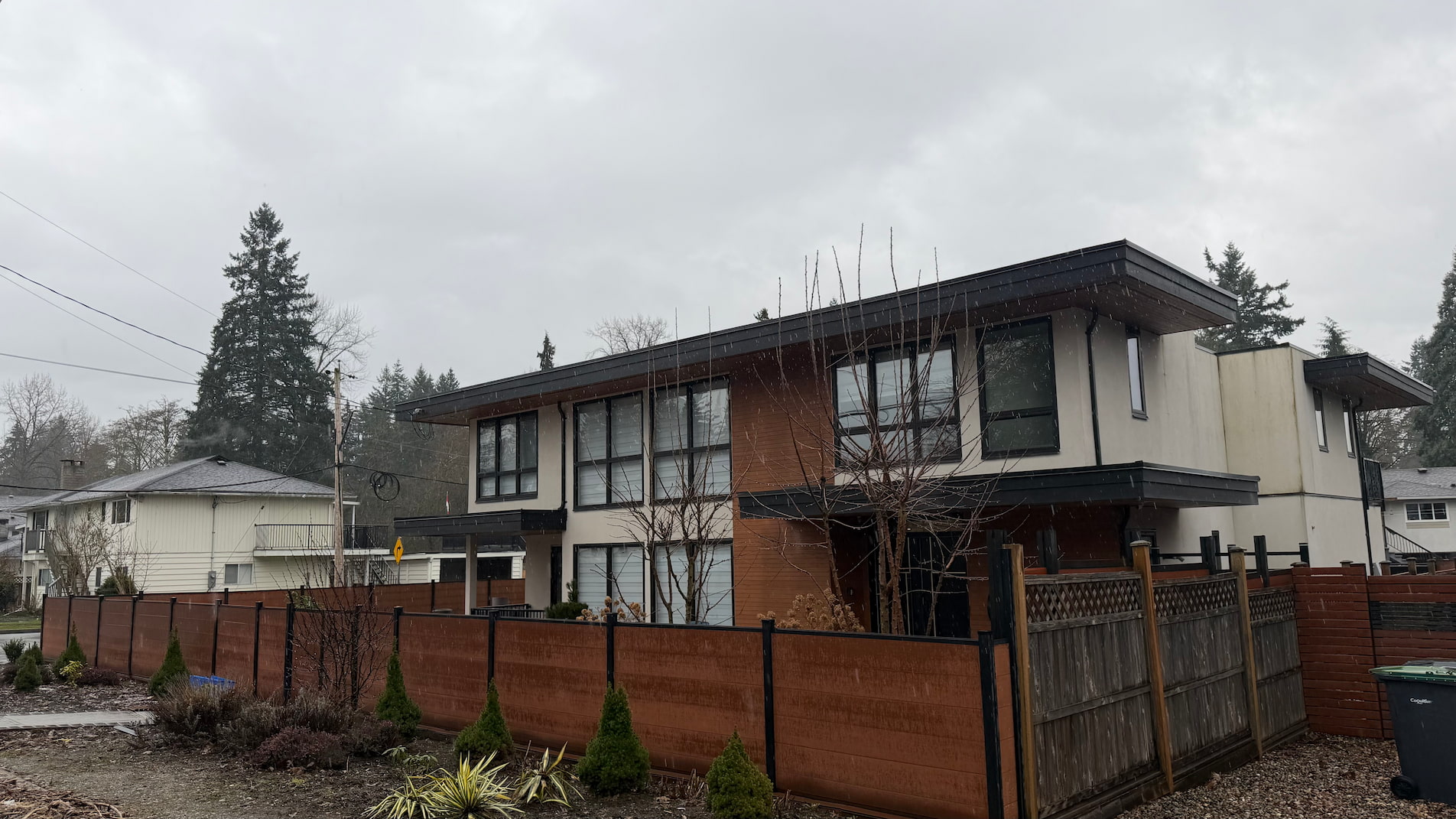
Horizontal Composite Fence

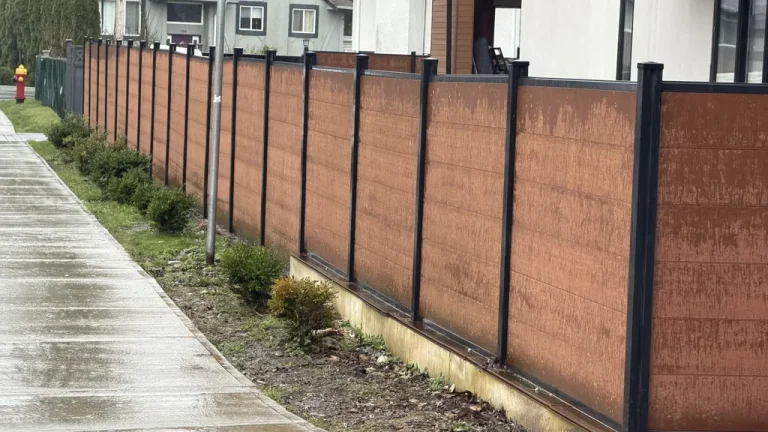
The most popular style of composite fencing in the Lower Mainland right now. A horizontal composite fence runs the boards horizontally rather than vertically, giving the fence a modern, architectural look that works well with contemporary homes and landscaping.

Horizontal boards also tend to show the wood grain texture more effectively than vertical installations, since the grain runs along the length of the board. For homeowners who want a fence that reads as a design element rather than just a property boundary, a horizontal composite fence is the standard choice.

We install horizontal systems in both privacy (zero gap between boards) and semi-privacy (small gap between boards for airflow and partial sightline) configurations. Post spacing and board width are designed around the specific panel layout for your property.

Composite Fence Panels

For homeowners who want a faster installation or a specific panel module size, pre-engineered composite fence panels are available in standard dimensions that install between posts set at fixed spacing. Panel systems are faster to install than board-by-board systems and are a good fit for straight fence runs on level ground.

For properties with slopes, curves, or non-standard lot dimensions, a board-by-board installation gives more flexibility to adjust the layout to the terrain. We advise on the right approach during the consultation.

Privacy Composite Fencing

A full-privacy composite fence uses boards installed with no gap, giving a solid visual barrier from the street or neighboring properties. This is the standard choice for backyard privacy fencing, pool enclosures, and anywhere a complete sightline block is the goal.

Privacy composite fencing is available in standard heights from 1.2m to 1.8m, with taller sections available where permitted by local bylaws. We check the applicable height limits for your municipality before finalizing the design.

Why Composite Fencing Is the Right Choice in BC

  1. BC's climate is hard on wood fencing: The Lower Mainland gets between 1,100 and 1,500mm of rain per year. That moisture cycles in and out of wood fencing constantly, expanding and contracting the boards, breaking down the paint or stain finish, and eventually rotting the wood at the base and at any fastener penetration point. Most wood fences in the Lower Mainland need repainting or restaining every two to three years and replacement within 10 to 15 years.
  2. Composite fencing does not have these problems: Composite fence panels are dimensionally stable in moisture, which means they do not expand, contract, warp, or split with the rain cycle. The finish is part of the material, not a coating on top of it, so there is nothing to peel or fade away. A composite fence installed in Langley or Abbotsford looks the same in year ten as it did in year one with nothing more than an occasional rinse.
  3. The cost comparison is straightforward: Composite fencing cost is higher upfront than wood. A composite fence might cost 40 to 60 percent more per linear foot to install than a comparable cedar fence. But when you factor in the repainting, restaining, board replacement, and eventual full replacement that a wood fence requires over 20 years, composite fencing is the more cost-effective option over the life of the fence.
  4. It looks better longer: Composite fence panels are available in natural wood grain textures and a range of colors, from warm cedar tones to cool grey and charcoal finishes. The color does not fade or mottle the way painted wood does, and the grain texture maintains its depth without resealing. A composite fencing Vancouver installation looks intentional and maintained for decades without the effort.


Composite Fencing Cost in Vancouver and Lower Mainland

Composite fencing cost in the Lower Mainland depends on the board profile, post system, fence height, and linear footage. As a general guide:

  • Standard composite fence panels in a basic vertical privacy configuration typically range between $80 and $130 per linear foot installed.
  • Horizontal composite fence systems, which require more precise post spacing and board alignment, typically range between $100 and $160 per linear foot installed.
  • Premium capped composite boards with a four-sided polymer cap cost more per board but deliver better long-term color retention and moisture resistance.

These are general ranges. The actual composite fencing cost for your project depends on the specific product, the post system, the terrain, and the linear footage. Contact us for a free on-site quote with exact numbers.

Why Choose TJ Railing for Composite Fencing

Transparent pricing

Transparent pricing

Full itemized quote before we start. Clear composite fencing cost breakdown with no hidden charges.

Every project is custom

Every project is custom

We measure your property and design the fence layout to fit. Slopes, corners, gates, and non-standard dimensions are all handled.

Quality products only

Quality products only

We use capped composite boards with four-sided polymer protection for better long-term color retention and moisture resistance.

Local and reliable

Local and reliable

Based in Port Coquitlam, serving the Lower Mainland regularly. We show up when we say we will.

AREAS WE SERVE

Composite Fencing Service Areas

We install composite fencing across the Lower Mainland, Fraser Valley, and Sea-to-Sky corridor:

GOOGLE REVIEWS

What Customers Say About TJ Railing

Real feedback from homeowners and property owners who chose TJ Railing & Patio Cover for glass railing, gate, fence, and exterior system projects across the Lower Mainland.

PROCESS

How We Install Composite Fencing

Free On-Site Consultation

Free On-Site Consultation

We visit your property, measure the fence line, assess the terrain and soil conditions, and walk you through the options for composite fencing systems. Horizontal or vertical, privacy or semi-privacy, panel or board-by-board.

Custom Design and Quote

Custom Design and Quote

We design the fence layout for your specific property, including post spacing, board profile, and height. You get a clear, itemized quote that covers materials and installation before anything moves forward.

Post Installation

Post Installation

Steel or aluminum posts are set in concrete footings at the engineered spacing. Posts are set plumb and allowed to cure before the boards are installed.

Board and Panel Installation

Board and Panel Installation

Composite fence panels or boards are installed on the post system. For horizontal systems, level lines are set and boards are installed from bottom to top at the designed spacing.

Finishing and Cleanup

Finishing and Cleanup

Post caps are installed. Fasteners are checked and confirmed. The site is cleaned up and the installation is inspected before we leave.

Final Walkthrough

Final Walkthrough

We walk the full fence line with you and confirm everything meets your expectations before we pack up.

Get Your Free Composite Fencing Quote Today

Ready to install composite fencing that looks good and stays that way without the annual maintenance? Get your free on-site consultation today. We come to you, measure the fence line, and give you a clear quote with no obligation.

FAQs

Frequently Asked Question

Composite fencing cost in Vancouver and the Lower Mainland typically ranges between $80 and $200per linear foot installed, depending on the board profile, fence height, and system type. Horizontal composite fence systems cost slightly more than standard vertical installations due to the additional precision required in post spacing and board alignment. Contact us for a free on-site quote with exact numbers for your project.


A properly installed composite fence using capped composite boards typically lasts 25 to 30 years with minimal maintenance in BC’s climate. Most composite fencing manufacturers offer warranties of 25 years or more on their products. The post system, when installed in concrete footings, has a similar lifespan.


Very little. Composite fencing does not need painting, staining, or sealing. An occasional rinse with water removes dirt and organic buildup. For mold or mildew that can develop in shaded areas, a mild soap solution and a soft brush is enough. There is no annual maintenance cycle the way there is with wood fencing.


For most residential applications in the Lower Mainland, yes. Composite fencing outperforms wood in moisture resistance, longevity, and maintenance requirements, all of which are significant factors in BC’s climate. The upfront composite fencing cost is higher, but the 20-year total cost of ownership, factoring in maintenance and replacement, is lower for composite than for cedar or pressure-treated wood.


Composite fence panels are available in a range of natural wood grain colors including cedar, teak, grey, and charcoal finishes. Horizontal and vertical board orientations are available. We bring samples to the consultation so you can see the options in person before committing to a product.


In most BC municipalities, a fence up to 1.8m in height on a residential property does not require a permit. Fences taller than 1.8m, fences on corner lots near intersections, and fences in certain zones may require approval. We are familiar with the fence permit requirements across the Lower Mainland and can advise based on your property and location.


Most residential composite fencing projects take two to four days depending on linear footage, terrain, and system complexity. Post setting and curing typically takes one day, with board installation following on the next day or two. We give you a clear timeline before the project starts.

RELATED SERVICES

Explore Other Fences Services